
E-commerce is changing quickly. Customers do not shop from one place anymore.
They use websites.
They use mobile apps.
They use marketplaces.
They connect with brands through different digital channels. This creates a challenge for businesses. How can they deliver the same experience everywhere? This is where headless commerce helps. According to Gartner, by 2026, more than 30% of large organizations will use composable commerce approaches to improve flexibility and digital experiences. Businesses want more flexibility. They want better digital experiences. They are moving away from rigid systems.
What Is Headless Commerce?
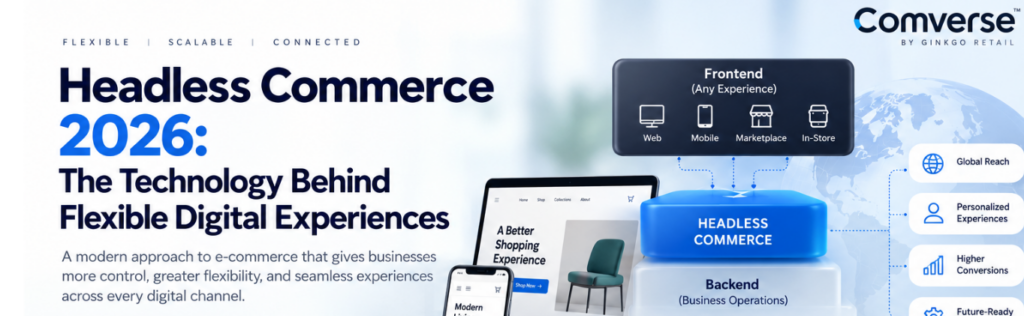
Headless commerce separates two important parts of an online store.
The frontend.
The backend.
The frontend is what customers see. It includes the website design and shopping experience. The backend manages business operations. It handles products. It manages inventory. It processes payments. It manages orders. It controls daily operations. In traditional systems, both parts are connected. A change in one area can affect the other.
With headless commerce, both sides work independently. This gives businesses more freedom. They can update designs. They can create new shopping experiences. They can launch new channels. They do not need to rebuild the complete system. This is why many businesses are exploring headless commerce 2026 solutions.
Headless vs Traditional Ecommerce
The difference between headless and traditional ecommerce is flexibility.
Traditional platforms are easier to start.
They offer ready-made templates. They include basic features. But problems appear as businesses grow. Adding new features becomes harder. Customization becomes limited. Businesses may need more developer support. Headless commerce works differently. It gives businesses more control over customer experiences. They can build unique websites. They can create mobile shopping experiences. They can connect with different marketplaces. The backend stays stable. This approach works well for businesses managing multiple channels.
Why Businesses Need Flexible Digital Experiences
Customer expectations are changing. People want faster websites. They want quick checkout. They want accurate information. They want personalized experiences. Businesses need systems that can support these expectations. A flexible commerce system helps brands create better experiences. It allows companies to improve their digital presence without changing the complete system. This is where an integrated commerce platform becomes valuable.
It connects different business functions.
Inventory.
Orders.
Payments.
Customers.
Shipping.
Everything works together.
How Comverse Supports Flexible Commerce
Comverse by Ginkgo Retail focuses on connected commerce. The platform helps businesses manage different digital channels from one connected environment. It supports businesses that need more than a simple online store. Comverse provides a Global integrated commerce platform designed for modern commerce operations.
It helps businesses manage:
- Multiple storefronts
- Marketplaces
- Customer data
- Inventory
- Orders
- Payments
This creates a smoother experience for both businesses and customers.
Headless Commerce and Better Customer Experiences
Modern customers expect personalized experiences. A visitor from one country may need different products and pricing compared to another customer. A business buyer may need different catalogs. This is where personalization software for ecommerce becomes useful. Businesses can create more relevant experiences. Customers can see products that match their needs. Offers can be customized. Shopping becomes easier. Headless commerce makes these experiences easier to build because businesses have more control over the frontend.
Supporting Global E-Commerce Growth
Global selling creates new challenges. Different countries have different currencies. Different customers have different expectations. Businesses need flexible systems.
A Multi-Currency E-Commerce Platform helps brands manage international sales more effectively. Comverse supports global commerce operations by helping businesses manage different markets. It supports:
- Multiple currencies
- Regional pricing
- Global storefronts
- Market-specific experiences. This makes international expansion easier.
The Role of Integrations in Headless Commerce
A modern commerce system cannot work alone. Businesses already use different tools.
CRM systems.
ERP platforms.
Payment solutions.
Shipping providers. These systems need to communicate. This is why e-commerce integrations are important. Comverse supports e-commerce platform integrations that help businesses connect different systems.
This improves data flow. It reduces manual work. It also creates better visibility across operations. For businesses managing global operations, global e-commerce platform integration becomes essential.
Inventory and Operations Need Connected Systems
A flexible frontend is only useful when backend operations are strong. Inventory problems can damage customer trust. A customer should see accurate stock information. Orders should update automatically. Warehouses should stay connected. This is why businesses need: E-commerce inventory software
For real-time stock visibility.
E-commerce stock management software
For managing products across locations.
E-commerce accounting software
For keeping financial records connected.
Shipping software for ecommerce
For smoother order delivery.
Headless commerce works best when these systems are connected.
Automation Makes Commerce Smarter
Growing businesses manage thousands of daily tasks. Manual work becomes difficult. Order updates. Stock changes. Customer notifications. Reports. Automation helps manage these tasks. With e-commerce automation software, businesses can reduce repetitive work.
Teams save time. Errors decrease. Operations become easier to manage. This is especially useful for businesses running an online store, marketplace or a large marketplace environment.
Headless Commerce for B2B Businesses
B2B businesses have unique needs. Orders are often larger. Businesses work with multiple buyers. They use custom pricing. They manage long-term relationships. This requires stronger systems. B2B ecommerce software combined with headless architecture gives businesses more flexibility. It supports custom buying experiences. It supports different customer groups. It supports complex operations. This makes it valuable for businesses looking for a Global shopify b2b alternative.
Why Headless Commerce Is Important in 2026
Businesses are moving beyond simple websites. They need complete digital ecosystems.
They need:
- Flexible storefronts
- Better integrations
- Automation
- Personalization
- Global scalability
These are now considered essential e-commerce platform features 2026. Companies using rigid systems may struggle as customer expectations change.
How Comverse Helps Businesses Build Future-Ready Commerce
Comverse by Ginkgo Retail provides a flexible commerce foundation. It supports businesses that need connected operations.
The platform helps manage:
- Marketplace operations
- Inventory
- Payments
- Shipping
- Customer experiences
- Global selling
It also supports marketplace management system requirements for businesses managing multiple sellers and channels. With connected systems, businesses can reduce complexity. They can manage operations better. They can create stronger digital experiences.
Final Thoughts
Headless commerce is changing how businesses build digital experiences. It gives brands more control. It creates more flexibility. It supports faster innovation. The future of commerce is not about using more tools. It is about connecting the right tools. Comverse by Ginkgo Retail helps businesses move toward this future. With its connected commerce approach, integrations, marketplace capabilities, automation, and global support, it helps businesses create scalable digital experiences. From inventory management to customer personalization, Comverse supports the systems businesses need to grow. For companies looking for a smarter, flexible commerce approach, headless commerce provides the foundation for the next generation of e-commerce.
FAQS
What is headless commerce and why is it important in 2026?
Headless commerce separates the frontend experience from backend operations. It gives businesses more flexibility to create websites, apps, and marketplace experiences without changing core systems.
How is headless commerce different from traditional ecommerce?
Traditional ecommerce connects the frontend and backend together. Headless commerce keeps them separate, allowing faster updates, better customization, and easier scaling.
How does Comverse by Ginkgo Retail support headless commerce?
Comverse provides a flexible commerce platform that supports custom digital experiences while keeping inventory, orders, payments, and operations connected in the backend.
Can headless commerce support B2B businesses?
Yes. Headless commerce works well for B2B businesses because it supports custom pricing, buyer experiences, multiple channels, and complex workflows.
What makes Comverse a suitable platform for flexible digital experiences?
Comverse connects marketplaces, inventory, payments, customer data, and integrations in one system. It helps businesses create scalable and personalized commerce experiences.

