
Most of the shopping is online. And no doubt, it is fast-paced. Customers now expect websites to load quickly. They expect a smooth checkout. They also expect better experiences on mobile devices. If a website feels slow, people leave. According to Google research, a delay of even one second can reduce conversions significantly. This is one reason why businesses are now moving toward headless commerce. This is necessary for e-commerce marketplace management. Especially companies managing large marketplaces and complex operations.
What Is Headless Commerce?
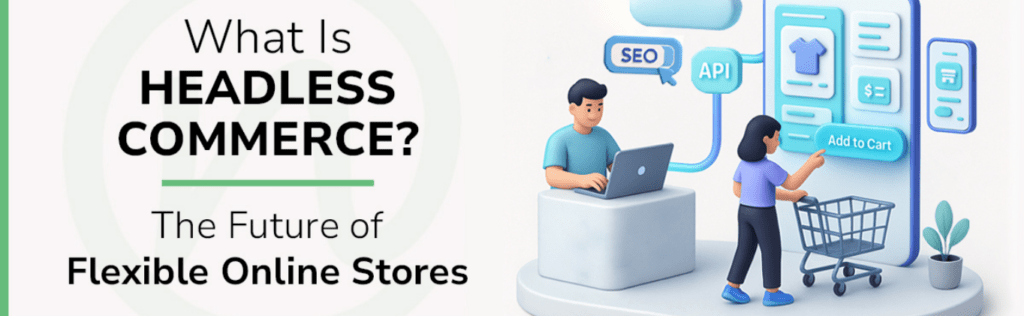
Headless commerce separates the front-end from the back-end. In simple words, the design part works independently. The operational part works independently. This gives businesses more flexibility. The front-end controls what customers see. The back-end handles orders, payments, inventory, and operations. Traditional systems connect everything together tightly. That creates limitations. This is why many companies are now moving away from older traditional e-commerce platforms.
Why Speed Matters So Much
Website speed affects everything. Slow stores lose customers quickly.
A fast website improves:
- conversions
- user experience
- mobile performance
- search rankings
According to research, improving website speed by just 0.1 seconds can increase conversions by almost 8%.
Headless commerce helps improve speed. This is because businesses can optimize the front-end. And it happens without affecting the entire system. That creates faster customer experiences.
Traditional Platforms Often Become Heavy
Many businesses start with simple platforms. Later, they keep adding plugins.
Inventory plugin.
Shipping plugin.
Accounting plugin.
Over time, the system becomes overloaded. This is common with many older e-commerce software and plugin-based platforms. Businesses managing complex e-commerce marketplace management operations face these problems early. The more plugins added, the slower the system becomes.
Headless Commerce Creates More Flexibility
Flexibility matters more in 2026 and beyond. Businesses want faster updates. Custom storefronts. Better mobile experiences. Headless commerce makes this possible. A business can redesign the customer experience without changing the back-end operations. This is very useful for businesses managing multiple storefronts and marketplaces. It also supports faster innovation.
B2B Businesses Need More Advanced Systems
B2B operations are more demanding than B2C stores. Large orders. Vendor management. Custom pricing. All of this creates complexity. This is why businesses involved in b2b e- commerce pakistan now prefer stronger systems and modern b2b ecommerce software.
Many companies are also searching for better b2b ecommerce platforms in Pakistan that support scalability properly. Headless systems fit these needs better because they offer more control.
Better Marketplace Management
Marketplace businesses need centralized operations. Inventory, vendors, orders, and shipping must stay connected. This is why businesses now invest more in e-commerce inventory software, stock management software and e-commerce accounting software. When these systems work together, operations become smoother. Disconnected tools create delays and errors. That is a major problem in large e-commerce marketplace management systems.
Personalization Is Easier with Headless Commerce
Customers expect personalized experiences now. Different users want different products, pricing, and recommendations. Headless systems allow businesses to personalize customer experiences more easily. This increases demand for strong personalization software for e-commerce. Businesses that personalize better usually perform better.
Comverse by Ginkgo Retail Supports Headless Commerce
This is where Comverse by Ginkgo Retail becomes important. They offer connected systems designed for modern commerce operations. Their platform supports headless architecture. That gives businesses more flexibility and speed. Inventory, vendors, payments, and orders work together inside one platform. This reduces dependency on external plugins.
They also support:
- centralized marketplace management
- automation tools
- multi-vendor operations
- real-time inventory tracking
- global store management
This improves visibility across operations. Businesses can manage complex workflows more efficiently.
Automation Improves Efficiency
Manual operations slow businesses down. Headless systems work better with automation. Modern businesses now rely more on e-commerce automation software. They also use centralised e-commerce management software. Connected reporting systems are important too. These tools improve speed. They improve efficiency. They also reduce manual work. Visibility becomes better across operations. It also improves scalability. This matters especially for businesses running a growing e-commerce marketplace in Pakistan.
More Businesses in Pakistan Are Looking for Better Systems
The demand for advanced commerce systems is growing fast in Pakistan. Businesses now actively search for e-commerce software in Pakistan Companies want systems that scale properly. Simple plugin-based setups are no longer enough. This is why businesses are replacing older electronic commerce software systems with more flexible solutions.
Why Businesses Are Looking Beyond Shopify
Shopify works well for many small stores. But growing businesses often face limitations. Too many plugins create operational problems. Customization becomes difficult. This increases demand for a shopify b2b alternative. Businesses now prefer a custom e-commerce platform that gives them more flexibility and control.
Final Words
Commerce is changing quickly. Businesses need systems that adapt faster. This is why demand for a customizable e-commerce platform 2026 continues to grow. Companies want scalable systems with better speed, automation, and marketplace management. Headless commerce supports all of these needs.
Headless commerce is no longer just a trend. It is becoming the future of online selling. Businesses need faster websites, better flexibility, and smoother operations. Traditional systems often become slow and difficult to manage over time.
That is why companies are moving toward smarter custom e-commerce platforms and modern e-commerce software platforms. Comverse by Ginkgo Retail support this shift by offering connected systems, headless flexibility, automation, and centralized marketplace management. For growing businesses, that creates a major advantage.
If you want to learn how Comverse by Ginkgo Retail supports headless commerce, visit today: https://comverseglobal.com/book-a-demo/
FAQs
1. What is headless commerce?
Headless commerce separates the front-end and back-end of an online store for better flexibility and speed.
2. Why is headless commerce faster?
It allows businesses to optimize the customer experience separately without slowing down operations.
3. Why do B2B businesses prefer headless systems?
Because they handle complex operations, vendors, inventory, and custom pricing more efficiently.
4. How does Comverse by Ginkgo Retail support headless commerce?
They offer connected systems with centralized operations, automation, and real-time inventory management.
5. Why are businesses moving away from traditional platforms?
Many traditional systems become slow and difficult to manage because of plugin dependency.

