
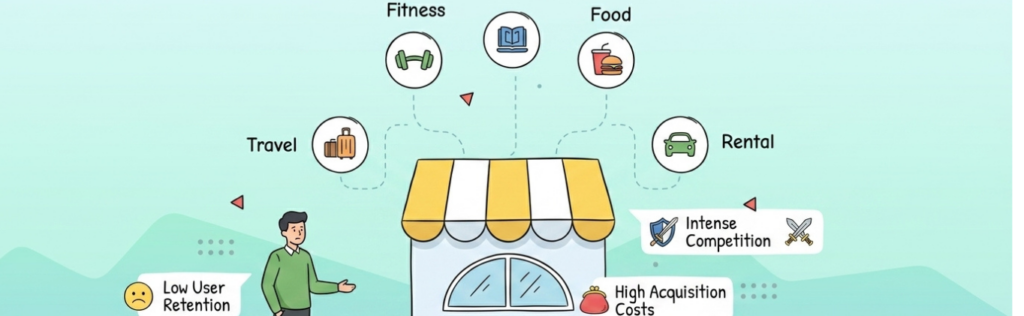
Launching a marketplace is not the hardest part. Getting the first sellers is not the hardest part either. The real test comes later. More sellers join. More products are added. Orders increase. Then the problems start. Inventory gets harder to track. Sellers need more support. Customers expect faster service. Payments become more complex. Shipping needs more control. The marketplace may have demand. But the system cannot keep up. This is why many marketplaces struggle to move from early growth to serious scale. What you need is e-commerce management software.
The Marketplace Model Is Already Huge
Online marketplaces are now a major part of global e-commerce. Euromonitor reports that online marketplaces accounted for 62% of global retail e-commerce sales in 2024. The value reached about $2.4 trillion. That is a huge market. But size creates pressure. A marketplace needs to handle more than sales. It needs to manage sellers. It needs to manage products. It needs to manage stock. It needs to manage orders. It also needs to keep buyers happy. That is where many platforms struggle.
Growth Creates a Data Problem
Imagine a marketplace with 20 sellers. Managing the data may still be easy. Now imagine 500 sellers. The situation changes. Every seller has products. Every product has stock. Prices may also change. Orders keep coming in. If this information sits in different systems, mistakes become common. Without e-commerce inventory software, a seller may update stock manually. But the website may not update immediately. A customer then orders an unavailable product. Now the team has to explain what happened. This is not a small issue. It can damage trust.
Inventory Is a Major Scaling Problem
Inventory becomes harder as a marketplace grows. There may be several warehouses. There may also be several sellers. Some sellers may use their own stock systems. Others may sell through different channels. The marketplace needs one clear view.
Comverse addresses this with centralized inventory control. It makes global ecommerce marketplace management easy. Its platform can sync inventory across sales channels in real time. It also supports inventory management across multiple locations.
This helps prevent overselling. It also helps prevent underselling. More importantly, teams can see stock movements without checking several systems.
Sellers Need Independence Too
A marketplace cannot scale if the main team handles every seller manually. Sellers need their own tools. They need to add products. They need to check orders. They need to manage stock. They also need sales information. Comverse, ecommerce automation software includes a seller centre and multi vendor system. Sellers can manage their products and orders from their own dashboard. Marketplace admins can also track seller activity and performance.
This changes the workload. The marketplace team manages the platform. Sellers manage their stores. Everyone gets more control.
Orders Become Harder to Manage
More sellers mean more orders. More orders mean more processing. A marketplace needs to know: What was ordered? Who is selling it? Where is it located? Has it been paid for? Has it shipped? Has the customer received it? If teams answer these questions manually, growth becomes expensive. A centralized order management system makes this easier. Comverse provides centralized order processing across multiple channels. Teams can track orders from placement through delivery. That gives teams one clear view. It also makes customer support easier.
Payments Add Another Layer
Payments become complicated as the marketplace grows. Different sellers may be involved. Different customers may use different payment methods. International sales add currencies to the mix. Comverse supports more than 14 payment gateways. It also supports digital wallets and flexible checkout settings. This gives businesses more payment choice. It also reduces the need to build separate payment workflows for every market.
Global Expansion Creates New Problems
Going global sounds exciting. But every new market brings new requirements. Different currencies. Different prices. Different products. Different shipping rules. Different customer expectations. Comverse supports a single domain global store. Businesses can manage different regions from one domain. They can also set different prices for different countries. The platform also supports multiple languages and currencies. This makes global expansion easier to manage.
Customers Are Using More Channels
B2B buyers are also changing. McKinsey found that B2B decision makers now use an average of 10.2 channels during their buying journey. The research also found that 56% would abandon a purchase or switch suppliers after a poor omnichannel experience. That matters for marketplaces. A buyer may visit a website. They may later use a mobile channel. They may contact sales. They may return to the marketplace to reorder. The experience needs to stay consistent.
Connected Systems Become Essential
This is where an integrated commerce platform becomes useful.
Inventory should connect with orders. Orders should connect with payments. Payments should connect with accounting. Shipping should connect with orders. Customer data should connect with sales.
Comverse supports integrations with ERP systems, e-commerce platforms, and other business tools. Its open integration platform is designed to connect with different systems and services. This reduces manual work. It also keeps data moving between systems.
Automation Helps Marketplaces Grow
A marketplace does not need people doing every small task.
Some work can happen automatically.
Stock updates.
Order updates.
Shipping notifications.
Customer messages.
Payment records.
Comverse includes automation features across its platform. It also supports abandoned cart recovery. Customers can receive reminders after leaving an order unfinished. Restock alerts are also available. These features help marketplaces recover lost sales and improve customer engagement.
Personalization Matters Too
A marketplace can have thousands of products. Customers do not want to search through everything. They want relevant products. They want useful offers. They may also need special pricing. Comverse supports personalized storefront experiences. Businesses can create different prices, product availability, and promotions for different markets. This is especially useful for B2B businesses. Different buyers can have different needs. The platform can support those differences.
Technology Can Become the Bottleneck
Many marketplaces start with a simple platform. Then they add more tools. Then more integrations. Then more custom work. Eventually, the technology becomes difficult to manage. Every change needs testing. Every new market needs more work. Every new seller adds another process.
This is why scalable technology matters from the beginning.
Comverse supports headless ecommerce. This lets businesses customize the customer facing experience while keeping the core commerce system separate. That gives businesses more freedom. They can build new experiences without rebuilding the entire platform.
Why Comverse by Ginkgo Retail Can Help B2B Businesses
B2B marketplaces have even more complexity. Buyers may need bulk ordering. Prices may differ by customer. Different sellers may have different products. Multiple users may work under one business account. Comverse supports both B2B and B2C operations. Its platform includes tiered pricing, bulk ordering, personalised storefronts, and multi-vendor management.
It also brings other important functions together.
Multi-location inventory.
Order management.
Customer relationship management.
Currency management.
Payment gateways.
Logistics.
Analytics.
All these modules work within the same commerce environment.
The Real Reason Marketplaces Fail to Scale
Most marketplaces do not fail because they lack customers. They fail when operations become too difficult. Inventory becomes unclear. Seller management becomes slow. Orders become harder to track. Payments become complicated. Customer support becomes overloaded. The platform becomes expensive to maintain. Growth then creates more problems than value.
That is the point where technology becomes the bottleneck.
Final Thoughts
A marketplace needs more than a storefront. It needs strong systems behind it. Personalisation software for e-commerce. It needs accurate inventory. It needs seller tools. It needs connected payments. It needs reliable shipping. It needs useful analytics. It also needs to support different markets. Comverse by Ginkgo Retail brings these functions together. Its multi-vendor system helps sellers manage their own operations. Its inventory tools provide real-time visibility. Its order management keeps different channels connected. Its payment system supports 14+ gateways. Its global store tools support multiple currencies, languages, and regional pricing. For B2B businesses, it also supports bulk orders, tiered pricing, and personalised storefronts. The goal is simple. Let the marketplace grow without letting the technology become the problem. That is where Comverse can give a growing B2B business a stronger foundation for the next stage of growth.
FAQS
Why do most online marketplaces struggle to scale?
Many marketplaces struggle because their systems cannot handle more sellers, products, orders, and customers. Poor inventory control, disconnected tools, and manual work can slow growth.
What does a marketplace need to scale successfully?
A scalable marketplace needs strong inventory control, seller management, order processing, payments, analytics, and automation. These systems should also work together.
How does Comverse help marketplaces scale?
Comverse by Ginkgo Retail connects inventory, orders, payments, sellers, and other operations in one platform. It also supports multi vendor and multi location operations.
Can Comverse support B2B marketplace growth?
Yes. Comverse supports bulk orders, tiered pricing, personalized storefronts, and multi vendor management. These features help B2B businesses handle more complex buying processes.
Can Comverse support global marketplace operations?
Yes. Comverse supports multiple currencies, languages, regional pricing, payment gateways, and global storefronts. Businesses can manage different markets from a connected platform.

