
Selling through one channel is fairly simple. Selling through five channels is not.
A product may be listed on a website. It may also be available on a marketplace. The same stock may sit in a physical store or warehouse. Now imagine that product gets sold. Every. channel needs to know. That is where real time inventory sync becomes important.real-time inventory sync.
The issue is not new. Research in the Journal of Business Logistics found problems with inventory records. These errors can affect stock levels, especially with shopping cart software. They can also affect customer service. Daily stock changes can make these errors harder to predict. Modern retail needs a better approach. A better e-commerce management software.
What Is Real-Time Inventory Sync?
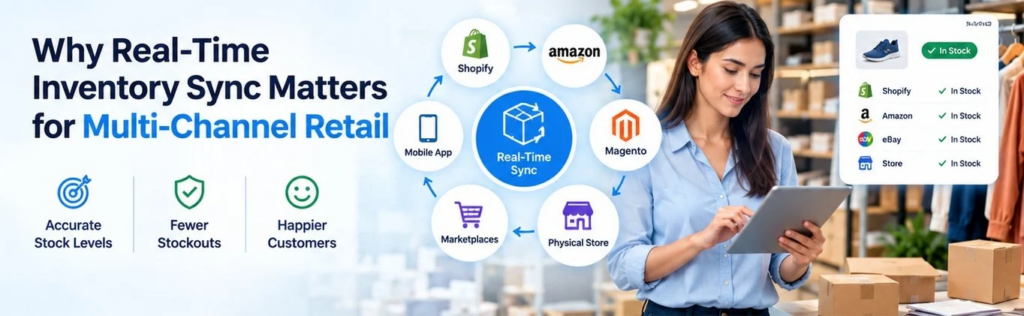
Real time inventory sync keeps stock data updated. It works across different sales channels. The stock count changes. The marketplace gets the update.
The warehouse gets the update too. This happens without someone changing each system by hand. It creates one clear view of available stock. That view is useful for both small retailers and large businesses.
Ecommerce inventory software becomes even more important when a company manages several stores, marketplaces, and warehouses.
Why Multi-Channel Retail Makes Inventory Harder
Selling across more channels creates more opportunities. It also creates more places for mistakes. Imagine a business with 100 units of a product. The product is listed on the website.
It is also listed on a marketplace. The business has a physical store. All three channels can sell the same stock. Now five units sell from online store marketplace. The stock should fall to 95.
If the other channels do not receive that update, they may still show 100. A customer could then place another order. The business may not have enough stock. That can lead to cancelled orders. It can also lead to refunds.
Overselling Is Not the Only Problem
Stockouts get attention Overstock can be just as costly. Too much stock ties up cash. It takes up warehouse space. Some products may also lose value over time.
The latest IHL Group research estimates that inventory distortion costs retailers about $1.7 trillion globally each year. It includes both out of stocks and overstocks. IHL says the problem equals around 6.2% of global retail sales. The numbers show why inventory needs attention. They need an e-commerce automation software. Good stock management is not just about knowing what you have. It is about knowing where it is. It is also about knowing what is moving.
Real Time Data Helps Teams Work Better
Inventory teams need clear information. Sales teams need it too. So does customer support. Imagine a customer calls about a product. The support agent checks the system. The stock is accurate. The answer is clear. The customer gets the right information. Now imagine the opposite. The website says the item is available. The warehouse says it is not. The customer gets a different answer from each team. That creates frustration. Real time data removes much of this confusion.
Inventory Should Connect With Orders
Stock does not exist on its own. It is linked to sales. A new order should change available stock. A cancelled order may add stock back. A return can also change availability. These actions need to stay connected. This is why ecommerce inventory software is useful. It can give businesses a central view of stock. It can also help keep inventory connected with orders and sales channels.
Warehouses Need the Same View
Multi-channel e-commerce businesses often use more than one location. One warehouse may serve Lahore. Another may handle Karachi. A third may support another market. Each location has its own stock. The business still needs one clear picture.
Ecommerce stock management software can help bring these locations together. Teams can see where products are stored. They can also plan fulfilment more effectively. This can reduce unnecessary transfers. It can also help prevent orders from being sent from the wrong location.
The Customer Experience Depends on Stock Accuracy
Inventory may sound like a back office issue.
It is not. Customers feel the impact. A customer sees a product marked as available. They place an order. Then they receive a cancellation message. That is a poor experience. The same applies to delivery promises. A business should only promise what it can fulfill. Accurate inventory helps make that possible.
Real-Time Sync Helps Marketplaces Too
Marketplaces have an extra challenge. There are many sellers. Each seller may have different stock. Some sellers may use different warehouses. Others may sell on different channels. A marketplace needs to keep all this information organized.
This is where marketplace management becomes important. Comverse by Ginkgo Retail, a smarter one-window solution for e-Commerce, supports multi vendor operations. Its platform includes a seller centre and multi vendor management module.
This gives sellers space to manage their own products and orders. It also gives marketplace operators better control.
How Comverse Handles Inventory Across Channels
Comverse focuses on centralized inventory control. It states that inventory can be synced across sales channels in real time. The goal is to reduce both overselling and underselling. This can be useful for businesses with several selling channels. A product can be sold through one channel. The available stock can then update across the others. Teams do not have to keep checking every storefront. That saves time. It also reduces the risk of manual errors.
Comverse Connects More Than Inventory
Inventory is only one part of the picture. Comverse also connects other commerce functions. Its platform includes order management. It includes customer relationship management. It includes multi location e-commerce inventory management.
It also includes payment gateways, logistics, reporting, and multi vendor management. This creates a more connected operating environment. The data can move between different parts of the business. That makes daily work easier.
Integrations Add More Flexibility
Businesses may already use an ERP. They may have a CRM. They may also use other business systems. Replacing all of them is not always practical. Good integrations can be a better option.
Comverse supports ecommerce integrations with e commerce platforms, CRMs, and ERPs. Its integration platform supports real time data sharing. It also allows businesses to create integrations around their own needs. This is useful for growing businesses. They can keep important systems. They can also connect them to their commerce operations.
Automation Reduces Manual Work
Real time sync works even better with automation. Stock can update automatically. Orders can move to the right team. Shipping information can be shared. Customers can receive updates. This is where e-commerce automation software becomes useful. Teams spend less time entering data. They spend more time solving real business problems.
Better Data Also Improves Planning
Inventory data is useful beyond daily operations. It can help with planning. Businesses can identify fast moving products. They can spot slow moving stock. They can see demand by channel. They can plan future purchases. They can also decide where stock should be stored. This makes inventory data a business tool. It is not just a warehouse number.
Final Thoughts
Multi channel retail creates more moving parts. That makes inventory harder to control. A small delay can create a big problem. Real time inventory sync helps keep the pieces together. It keeps stock information current. It gives teams better visibility. It also helps customers get accurate information.
Comverse by Ginkgo Retail takes this connected approach. Comverse keeps inventory under one system. It works across sales channels. It also supports multiple vendors. Businesses can manage several locations.
Orders stay organized.
Payments stay connected.
Logistics are easier to track.
Reports are available in one place.
Its integration platform connects e-commerce platforms. It also connects CRMs and ERPs. This gives businesses a clearer view of their operations. It helps growing retailers and marketplaces stay organized. More channels should mean more sales. They should not mean more confusion. Real-time inventory sync helps make sure they do not.
FAQs
What is real time inventory sync?
It keeps stock data updated across all sales channels. This helps businesses avoid stock errors and overselling.
Why is inventory sync important for multi channel retail?
It keeps stock levels accurate across websites, marketplaces, and stores. Customers also get more reliable stock information.
How does Comverse help with inventory management?
Comverse keeps inventory under one system. It supports multiple sales channels and locations.
Can Comverse manage multiple vendors and locations?
Yes. Comverse supports multi vendor management and multiple locations. Businesses can manage orders and stock from one platform.
Can Comverse connect with other business systems?
Yes. Its integration platform can connect e commerce platforms, CRMs, and ERPs. This keeps business data connected.

